Showing posts with label art prints. Show all posts

Art Evolution: Painting Styles Throughout History | NZ Fine Prints

Art Evolution: Exploring Painting Styles Throughout History

Paintbrushes sitting in front of abstract-style paintinging in front of abstract-style painting

From ancient cave paintings to Warhol’s famous art prints, there’s no doubt that painting styles have evolved in numerous ways throughout history. In this blog post, we walk through some notable periods in art history. Read on to explore ancient artworks from around the world, gain a brief glimpse into their evolution, and reflect on how these styles are expressed in the art scene today.


Prehistoric Painting

Prehistoric paintings are the oldest known paintings of prehistoric man, found on the walls of caves, produced by people of preliterate cultures. Prehistoric paintings are now considered to be priceless artworks. During their time, they are thought to have symbolic or religious intent, and to have been used to keep records and track major historical events. Prehistoric art was observational, documenting the other cultures they had come across, the success of hunters, and more. 

The first examples of art are dated back more than 64,000 years, such as the 71 hand stencils found in the Cave of Maltravieso, alongside animal paintings and some linear designs. Other forms of prehistoric art include engraved stones and crosshatch designs, found throughout Europe and South Africa.


Egyptian Art

Egyptian art gained traction across the western world for its symbolic, vivid, and abstract design. A notable difference between Egyptian art and the record-keeping of prehistoric times is intent. Art was used in a more ritualistic way to express wealth, power, belief systems, history, and life after death. For example, statues were used to honour the deceased. This practice was a symbolic way for the spirit of the dead to remain connected from beyond the terrestrial realm.

There are many examples of ancient Egyptian art, both two and three-dimensional, used to honour the dead. Heavy symbolism was used to connect the Egyptian people with the gods, creating beautiful, usually front-facing statues to honour the royal and elite. Throughout all art styles, the ancient Egyptians used the imagery of people, animals, and other figures, accompanied by text. 

A notable attribute of ancient Egyptian art is the use of size. Many ancient art pieces found across Egypt use size differences to convey hierarchy. Royalty was portrayed in large scales while lower-ranking figures or average Egyptians were depicted much smaller.


The Middle Ages

The Middle Ages are of incredible importance in art history. During this time, medieval artworks around Europe were heavily influenced by Christianity. Societal and cultural developments lead to a boom in the visual arts and a shift in aesthetic values. Medieval artists developed secular art, a departure from the common religious themes at the time, and the wealthy and elite would commission works such as cathedrals, churches, and manuscripts. 

Medieval art encompasses many artistic styles, including the birth of Byzantine, Romanesque, and Gothic art, to name a few. Artists during this period would use mineral pigments and a layering technique for painting. With few options for creating a range of colours and textures, artists would paint over dry colour to create mixes of colour and thick-textured brushstrokes.


Renaissance Art

Renaissance art developed around the year 1300 and is associated with social changes within society. Art in the Renaissance period was influenced by the Middle Ages, with scholars studying literary texts from medieval scholars before them. With artists such as Leonardo Da Vinci and Michelangelo, this is one of the most influential and widely recognised periods for art. 

This period saw a shift in painting and sculpture style, with the development of linear perspective, alongside a range of other techniques, used to give their work a more realistic feeling. The more abstract art of the medieval period had transitioned to a representational style that expanded the subject matter to go beyond biblical scenes. 

More and more artists began adding their own originality to artworks and the period is seen to represent the rebirth of human ideals and naturalism. As well as oil painting, the Renaissance saw the full development of mixing techniques, originally seen in medieval artworks.


Pop Art

Of the numerous modern art movements to date, some of the more notable styles included futurism, surrealism, minimalism, and of course, Pop art. Andy Warhol and other artists within the pop art movement used imagery from popular and mass culture to challenge historic styles of art. This movement utilised commonplace objects and imagery from popular culture or mass-produced objects.

The modern world rejected the history of realism in art and saw the rise of innovative and experimental art. The focus of artists shifted from depicting realistic scenes to the use of various materials, techniques, and other abstract elements. 

Warhol’s work with Marilyn Monroe and the infamous Campbell’s Soup Cans are some of the most recognised modern art pieces. The style has cemented itself in art culture for its use of humour and irony, communicated through the bright punches of colour in the various works.


Neo-Expressionism and Beyond

In the late 70s, Neo-Expressionism dominated the art world, with the portrayal of realistic and familiar objects returning, but often with a more abstract nature. The use of colour harmony and intense expressionism was used as a reaction to the high-concept, minimalistic styles previously seen. The post-modern era of art sees no clear direction for future styles, but it is thought that the world is moving toward pluralism. This means that different art and painting styles are being adopted from various cultures, with artwork and artists becoming more diverse and all-encompassing.


Find Your Favourite Art Styles at New Zealand Fine Prints

There are too many art styles and movements throughout history to cover in a single article. Here, we’ve highlighted some of the most influential periods from prehistoric times to today, showing a brief glimpse into the diverse evolution of art. Interested in delving deeper into the art scene? If so, we have a range of beautiful canvas wall art in NZ for you to explore. Browse New Zealand Fine Prints online today and find your favourite art prints from around the world.

Beautiful Black and White Art Prints for Your Home | NZ Fine Prints

Beautiful Black and White Art Prints for Your Home 


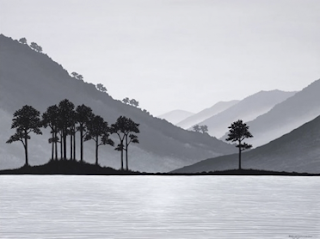
As the Mist Clears by Robyn Schroeder, black and white art print
Black & white print by NZ artist Robyn Schroder "As the Mist Clears"

Monochrome art prints have long been a staple when it comes to decorating, as black and white—when used appropriately—can fit into almost any colour scheme. Many different styles of interior design make use of monochrome tones, including minimalist, contemporary, art deco, and Scandinavian design. Even very vibrant colour palettes can benefit from a bit of black and white, as black helps bring a space down to earth and gives other colours a grounding point, while white provides a dramatic contrast. Including both is a great way to focus the look of almost any space and bring a fresh sophistication to it. Here in New Zealand, black and white (or silver) are two of our national colours, along with the red ochre seen on the Tino Rangatiratanga flag. When adding a bit of black and white to a space here in Aotearoa, it carries a little bit of extra meaning, and can really be a chance to create a visual context that us Kiwis live within. Below, we showcase our favourite monochrome art prints, with particular attention to the those that reference our home right here at the bottom of the world.

Rise Up – Barry Ross Smith

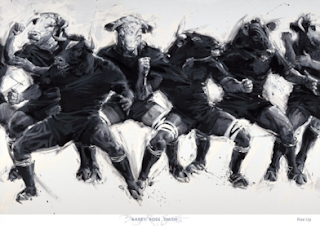
Haka bulls

First, we have this print by Barry Ross Smith. It’s no surprise that a lot of Kiwiana artworks reference our national pastime—rugby. For many, the All Blacks are the first thing that comes to mind when you mention ‘black’ and ‘New Zealand’ in the same sentence. Nearly all our national sports teams use either black or silver in some way, and this translates easily into the monochrome pieces created by Kiwi artists. Barry describes this painting as evoking the passion we feel for our national game, while tying it to our agricultural heritage.


Mince – Dick Frizzell


Mincer with knife

Part of a series of domestic graphics, ‘Mince’ is an understated print, perfect for the kitchen. It embodies the labour of household management, but chooses to do so in a sharp, uncompromising way, referencing the Kiwi approach to practical living. This screenprint is available on Artistico Fabriano cotton rag paper.


As the Mist Clears – Robyn Schroeder

Monochrome NZ landscape with lake & trees

This print of Robyn Schroeder’s original painting showcases another element of Aotearoa that we hold dear—the natural landscape. Presented in stark black and white, this piece depicts mist evaporating off a South Island lake in the morning. Connection to the land has always been important for those living in New Zealand, giving this piece an unspoken weight and beauty. This print is ideal for pulling together larger spaces, like the dining or living room.


Game of Two Halves – Weston Frizzell

Black & White Rugby Ball with Koru lacing

Another Frizzell family piece, this print is a cool piece of modern NZ printmaking which also celebrates our national game of rugby. It is a sophisticated representation of the game, referencing the popular phrase “game of two halves”, which is used to state that any situation could end any number of ways, regardless of how it seems to be going now. It also references the koru shape, the illusionist works of MC Escher, and the dualist concept of Yin and Yang.


Scared – Colin McCahon

I am Scared, I stand up in Colin McCahon's handwriting
Finally, we have this NZ masterwork. More abstract than the others presented so far, ‘Scared’ can be seen as a highly personal work, and an allegory of McCahon’s life, but its cry is also a universal one—a call of protest and a demand to take action. Colin McCahon started his ‘Scared’ series in the mid-70s when he was around 60 years of age. His work was often directly related to emotion, and he talked at length about his fears and doubts when discussing his art. The artwork has a harder edge than more commercial Kiwiana style prints, making it better suited to spaces that want to be more attention grabbing, or challenging. Similar prints by this artist can be found in our Colin McCahon art collection.


Learn more about decorating with Fine Prints!

For more advice on decorating from the NZ experts, follow our blog for articles like this. If you’re interested in purchasing high-quality prints in black and white, you can also take a look at our new black and white prints collection!

An Art Print for Every Bird of The Year | NZ Fine Prints

An Art Print for Every Bird of The Year

While the annual Bird of the Year (BOTY) competition may have already come and gone for 2020, we believe that native birds of New Zealand need all the love they can get all year round. In tribute to the Bird of the Year competition that raises awareness of native birds in Aotearoa, in this post we revisit four of the birds that have recently been voted Bird of the Year to showcase art prints of each specimen by a talented avian artist from our collection of prints for sale.

The Kākāpō (2020)

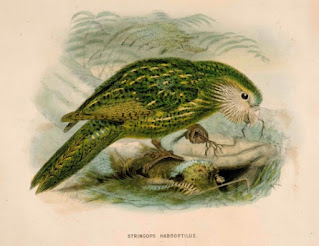
Kākāpō or Owl Parrot from Buller's Birds of NZ.


The first New Zealand bird we introduce is the kākāpō (a.k.a. stringops habroptilus), winner of New Zealand’s Bird of the Year (Te Manu Rongonui o Te Tau) for 2020. In this print, we see a beautiful rendition of the kākāpō or "Owl Parrot" from Buller's Birds of NZ. This is a fine example of this endangered species before it was endangered! This large, nocturnal bird is a flightless, ground-dwelling parrot endemic to New Zealand. First published in 1888 in Buller’s A History of Birds of New Zealand, second edition, the kākāpō is subtitled as an “Owl Parrot”, a common name at the time, now forgotten by most. Bird prints like this one will make a fine addition to any home or office, bringing a refreshing touch of natural Kiwi beauty to your walls.


The Kererū (2018)

Kererū, the New Zealand wood pigeon by John Keulemans
Print of a Kererū by Keulemans

Meet the Kererū (Carpophaga Novae Zealandiae), the only pigeon that is native to the mainland of Aotearoa. Winner of Bird of the Year 2018, this large feathery fowl is known for its noisy wingbeats and is seen as an important seed disperser for native trees, attributed to its ability to swallow large fruits that other birds cannot. It’s for this reason that kererū are usually seen sitting on a branch, digesting their recently devoured meal. The featured artwork elegantly captures the pigeon’s soft plumes, as it sits perched in its natural habitat. Created by John Keulemans, this image was first shown in 1888 in W.L. Buller’s A History of the Birds of New Zealand, second edition, alongside the kākāpō and many other native New Zealand fowl. This print comes in a 350 x 490 mm sizing, surrounded by a charming white border to complement any home décor!

The Kea (2017)

Buller (After Bill Hammond) by Barry Ross Smith
Buller (After Bill Hammond) feat. NZ's native kea

Another championing bird of New Zealand is the kea! As part of the parrot family Nestoridae, the kea (green bird, second from the left) is a large species of parrot native to the South Island of New Zealand. Living in alpine and forested regions of the island, the kea is from the same family as the kaka and is most distinctly recognised for its olive-green plumage and brilliant orange colouring under the wings. The print shown is a Barry Ross Smith artwork from his “island” series of paintings. The title,  "Buller (After Bill Hammond)" references both Buller’s Birds and Bill Hammond. In this painting, the island is home to a variety of native New Zealand birds, including the Tui, Kiwi, Weka, and Kea, alongside the extinct Huia. Any bird lover or collector of New Zealand animal posters would love to add this uniquely NZ artwork to their collection!

The Kōkako (2016)

kōkako in Karaka by Holly Roach
Kokako Print by NZ Artist Holly Roach

For our fourth winner, we feature the kōkako, champion of the Bird of the Year award for 2016! The wonderful print shown above is a fine example of the kōkako (Callaeas cinerea), which is large, featuring long legs and tail, deep bluish-grey plumage, a black mask, and a short, strongly arched bill. The “Kōkako in Karaka” image depicts NZ Flora and fauna by Holly Roach. The kōkako in this print sits idly in a karaka tree, feasting while surrounded by fat orange berries. Using archival inks for rich, deep colour that lasts, the fine art print is created on a smooth matte paper that’s mid-weight and acid-free. This contemporary print comes in a 420 x 600 mm and is available alongside many other incredible bird posters within our online NZ bird prints gallery.

Buy quality long-lasting prints from New Zealand Fine Prints

We hope you enjoyed this brief tribute to the birds of New Zealand! If you’re interested in seeing more exceptional works from our artists, feel free to explore New Zealand Fine Prints online. Whether you’re looking for incredible prints of New Zealand birds or art nouveau posters, we have a vast range of art prints for you to see. If you have a favourite already, then peruse our collection of artists online to view all their latest works, or search prints by category and find brilliant new artists to love. Each print is deliverable either rolled and kept safe in a tube, framed or occasionally even pre-stretched on a canvas, ready-to-hang upon arrival. Start shopping New Zealand’s greatest prints online today!

Sofia Minson "Blessing the Pharaoh" Print Launch

Artist Sofia Minson
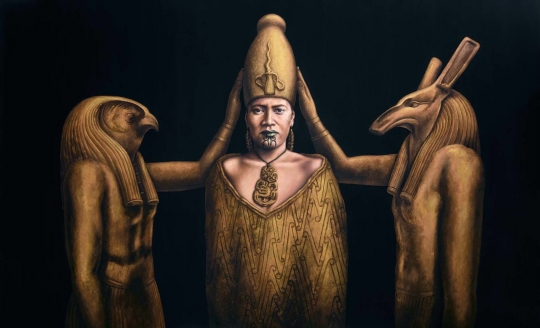
A new print from Auckland artist Sofia Minson was launched today.  It is called "Blessing the Pharaoh" - and from 4pm this afternoon it is available to buy from New Zealand Fine Prints.  To accompany its launch we have been given a superb set of resources about the new artwork, there is a very interesting story of the paintings origins, symbolism and meanings on the listing in our catalogue as well as the video about the making of "Blessing the Pharaoh", a link to which is posted below.

Sofia says "I am drawn to the ever-unfolding wisdom and links between Maori and Egyptian myths, which demonstrate principles of nature in the form of gods and goddesses. Here we weave a new cross-cultural story, yet it is an eternally old one about the transformation of consciousness.”

New Limited Edition Print "Blessing the Pharaoh"
A brief summary of the new work:

● Blessing the Pharaoh is based on the statue in the Cairo Museum of Horus and Seth
blessing the Pharaoh Ramesses III.
● The central figure of the painting embodies atua wahine - divine feminine lunar energy
and is seen as Hine-nui-te-pō, the goddess at the threshold of life and death in Maori
cosmology.
● The image reflects on our human archetypal story of inner sight unifying left and right
brain ways of thinking. The alchemical image ushers in a new state of being where left
brain logic does not rule over right brain holistic thinking, but a higher union of the two is
established.

And as Sofia says, “Before the painter makes their first mark, the blank canvas stares back at them in challenge.”


Trending New Zealand art in 2018

Today's post is a short video of New Zealand's top selling art prints/fine art posters in 2018.  Counting down the most popular prints based on sales data from New Zealand's largest art print store.

Video made by 11 year old Lucy, wondering if she will be following in the steps of her parents (and grandparents) to be part of the New Zealand Fine Prints company story around 2030 or so? 

Island series a breath of fresh air

A decade ago artist Barry Ross Smith created a series of artworks that were hailed by critics as "hymns to rural New Zealand",  there followed a collection of top selling prints that sold to city and country folk alike.  His finely realised portraits of NZ farming life were informed by his deep personal roots in the country, at the time he lived and had his studio on a farm - this was authentic rural NZ art that stood up to the scrutiny of those with an expert eye for farming matters.

It is always hard for an artist to move on to a new phase of work.  Not just the difficulty of finding a new theme to explore at a professional level, but also the buyers of their work want them to keep ploughing the same field long after the artist themselves may have moved on in their work (Bill Hammond and his bird paintings for instance, he's over birds but these are the ones that collectors demand).

Barry has successfully and cleverly moved to a new and innovative series of paintings that we really like.  The New Zealand landscape imagined as a series of islands.
Waterfront Villas -"Islands" series print by Barry Ross Smith

The story of Aotearoa/NZ is the story of island isolation, of huddling together on rocky outcrops in the Pacific Ocean.  There is an element of the slightly surreal about Barry Ross Smith's island series which lifts them out of being just another photo realistic painting that is essentially just a reproduction of the NZ countryside, an honest and competent depiction of a scene but lacking the mystery of the very best kiwi landscape artists such as Grahame Sydney (who as an aside recently gave us the glorious phrase in response to the work of another artist, "Well, x is a good amateur, but a poor professional"! ).

These prints are refreshingly different and look great on the wall hung as a series (coherent but not to matchy matchy).  They are also well-priced, at just under $60 per print.  These new prints are saying something more than just what you see, raising interesting questions about the evolving kiwi identity as the 21st century advances.  And although this series is a significant advance on what has become very tired nostalgic white bread kiwiana, it's similar in spirit to that which energised the popularity of kiwiana art for NZ homes over the last 20 years,  a low key but deeply felt appreciation of our unique NZness, with a light touch, almost but not quite an in-joke (perhaps the wry smile) that only Aotearovians fully appreciate.

And as the person who catalogues for sale every new NZ art print I would like to add that our unique identity does not have to just revolve around endemic birds!   Of the last 20 new prints that have come out from NZ publishers and artists 16 of them featured birds, there are fast becoming as cliche as the nikau palm and cabbage tree of the mid 90s.   We have predicted the next trend will be fish. And then insects.  Even if we are wrong it must be time to move on from things avian...

2017, Year in review for NZ art market

Like many retailers a big story for us in 2017 was the great election pause, the spending hiatus between September's election and the coalition's formation of a new government several weeks later.  Why people chose to put off buying decisions while we waited for Winston Peter's to decide which parties he would go into coalition with is not clear, but New Zealand Fine Prints was not alone in noticing very flat sales for our artists and publishers during this period in what was otherwise a pretty normal trading year.

We didn't notice any big new art trends emerging, it was a consolidation year with a broad range of styles, genres and artists selling rather than a concentrated burst of sales like we have had previously for street art, or mid century modern.

The most popular prints in New Zealand were a familiar roll-call of the well-known, the well-distributed and the well-priced.

Here are the 80 most popular prints in New Zealand for 2017

Mickey to Tiki by Dick Frizzell
Native Birds of NZ Poster
Tui Print from Bullers Birds of NZ
Fantail from Buller's Birds of NZ
World Map Poster (NZ centred)
Native Birds of NZ Canvas Art Print - Ready to Hang
The Endless Summer Poster
Captain Cook's Map of the Coast of New Zealand (Large)
Dawn/Water Poem by Ralph Hotere
Grounded in Papatunanuku with Strength and Unity II by Jane Crisp
Treaty of Waitangi Poster
New Zealand Tramping Huts Poster
Boats, Island Bay by Rita Angus
Castaways (Kina) by Jo Bridge
The Answer (Meaning of Life) by Dick Frizzell
Vintage World Wall Map Canvas Print
New Zealand Vintage Poster
The Fall of Icarus by Bill Hammond
NZ Map Poster
Tomorrow will be the same by Colin McCahon
Bill Hammond Print "Jingle Jangle Morning"
Ena Te Papatahi by Charles Goldie
Goddess of Mercy by Rita Angus
Diana Adams Print "Secluded Cove"
Gordon Walters Print - Makaro
Grahame Sydney Print "Fiddler's Flat"
Indigenous Preservation II - Tahi by Jane Crisp
Rangitoto by Diana Adams
The Starry Night Poster by Vincent Van Gogh
Vintage Tasman Empire Airways Poster
Winter Sports at Tongariro National Park Vintage NZ Poster
All 'e Same t'e Pakeha by Charles Goldie
View Towards Mount Richmond by Toss Woollaston
Cass by Rita Angus
Hot Buttered by Dick Frizzell
Koru by Diana Adams
River's Journey by Diana Adams
Vintage Geological Map of New Zealand
Auckland Harbour from Ponsonby by Fiona Whyte
Dominion Map of NZ - Vintage Canvas Style
New Zealand by Captain James Cook
Rangitoto View Canvas Print by Irina Velman
Seven Minutes (Crayfish Print) by Dick Frizzell
The Kiss by Gustav Klimt
Vintage Queenstown Travel Poster
Almond Blossom Poster by Vincent Van Gogh
Balloon Girl by Banksy - Large Poster
Dick Frizzell's Print Mickey to Tiki (Reversed)
Fish species of New Zealand Poster
Kowhai Botanical Print by Emily Harris
Memories by Charles Goldie
Virgin Forest by Henri Rousseau
Botanical Print - Pohutukawa by Sarah Featon
Hawkdun Spring by Grahame Sydney
NZ Vintage Fly Fishing Poster
Print of "Garnet Dairy" by Graham Young
Queen with Moko by Barry Ross Smith
Starry Night Print by Vincent Van Gogh
Tip Top Times by Sam Mathers
Treasure Hunt - Kotare’s Taonga by Jane Crisp
Tree (1943) by Rita Angus
Wellington Lights Photograph
Winery Doors Poster - Hawkes Bay & Wairarapa
Aotearoa Canvas Print by Jason Kelly
Calloused Veneer by Barry Ross Smith
Fishes of New Zealand Poster
Lunchtime atop a skyscraper New York 1932 by Charles Ebbets
Native Flowers of NZ - Ready to Hang Print on Canvas
Riverhead by Karl Maughan
Road to Leigh 1979 by Retro Posters
Summertime Wellington by Marianne Muggeridge
Tony Ogle Print "Harotaonga"
Tututables Reproduction Print by Weston Frizzell
Vintage Native Flowers of New Zealand Poster
Wellington Vintage Poster
As there is a Constant Flow of Light by Colin McCahon
Cabbage Tree by Diana Adams
Great Wave by Katsushika Hokusai
Kapiti Island by Ernest Papps
Kids at Play by Matt Guild

Looking forward to 2018 which will be the new artist names entering this list?

2018 NZ Fine Prints Catalogue coming out this week

Glimpse of NZ Fine Prints 2018 catalogue - (artists "A"...)
This was going to be called the New Zealand Fine Prints "50th Anniversary" catalogue but we chickened out due to our anniversary actually being last year and eagle eyed observers might think our catalogue was already out of date.

We already have to print enough catalogues to last a couple of years (we send them out to both our very large mailing list (mail order is still a great channel for us) and include one with every purchase).

Deciding which artworks to include is a huge exercise.

Our paper catalogues don't have to be the sourcebook for every print, poster and limited edition print available from a NZ artist these days - this is the job of our online catalogue at prints.co.nz.  However a physical catalogue is a great showcase to let you all know about new prints and artists who have published/created prints recently as well as an easy way to show what we do for customers who are hearing about us for the first time.

Putting together a new catalogue is not easy production wise, we have to get all the details of every print right as well as to try not to include too many editions that will sell out while the catalogue is current.  That's before we wrangle hundreds of images into order without mixing them up, or, in one memorable case - printing a Doris Lusk painting upside down without noticing!

It also seems that as soon as the catalogues come back from the printers our catalogue manager gets a tonne of wondrous submissions of new work that we wished we could have included!

Our catalogue is now signed off and should be printed by the end of this week, it's a heady mix of fresh ink in the office when the pile of boxes are delivered and so exciting for us when the first sales of never before seen prints start coming in.

You can download your own (7mb) final draft of the NZ Fine Prints 2018 catalogue here - and look out for the paper version in a letterbox near you soon!


That's how we roll - packaging prints for delivery

Artists submitting work for the first time often ask "Do you want me to send my consignment of prints flat?". Customers are curious to know if prints are delivered rolled up or flat too, but nothing beats the intensity of discussion on this topic when two print retailers start talking about which is best!

Print with giftwrap and Airmail packaging
For the record NZ Fine Prints deliver prints carefully rolled in large cardboard mailing tubes.  This is despite NZ Post dropping their long-standing cylinder rate which meant we used to be able to deliver nationwide using their extensive network at a price less than the equivalent volumetric ticket.

[Framed prints have cardboard corner protectors added to the corners of the frames, the glass is faced with cushion foam board, with each picture wrapped in bubblewrap, then encased in corrugated cardboard and then another final layer of bubblewrap.]

Why have we chosen to roll prints rather than send them flat?  Long experience has taught us that a cylinder is stronger packaging.  The downside of rolling prints can be mitigated but flat packages are more easily bent or folded by the courier which means we have to replace the damaged prints more often than the rare occasion one of 3mm wall thickness tubes are run over.  Although it costs more to send (Airmail is calculated by weight) we use thicker and heavier tubes than those sold by some stationery companies as being suitable for posters or prints in stores (or in Post Shops for that matter). We like to say when asked about how strong our tubes are that they are the same type of tubes that were used to build Christchurch's famous cardboard cathedral!

ChCh's transitional cathedral built with mailing tubes like ours!
The two drawbacks of rolling prints are that the paper can be creased and the prints can be difficult to remove from the tube once they are delivered to a customer.  Avoiding creasing the prints comes down to three things, not rolling the prints too tightly (which means using mailing tubes of a sufficient diameter that the prints are not rolled into an unnecessarily small bundle), rolling the prints gently on a soft surface (we use carpet) and rolling with the grain of the paper, not across it.  The last one is the most critical and you can test this for yourself quite easily.  Take a piece of paper and attempt to roll it in one direction, then turn it 90 degrees and roll it the other way.  One way will be easier, the paper will feel floppier or softer to turn - rolling in the other direction you will feel a resistance - rolling this way against the grain of the paper can easily result in creasing of the paper that is difficult to fix as the fibres of the paper will actually break.

The second trick is to make prints easy to remove from the packaging.  We wrap the roll of prints in acid free tissue paper - that way they slide out of the tube.  Rolling a print or poster and dropping it into the tube without wrapping the prints means they spring open and line the inside of the cylinder.  This makes them difficult to remove from the package unless you are very careful and have lots of practice at reaching into the tube, holding the inside corner of the prints very tightly and gently twisting the contents so they contract into a smaller roll inside the tube before sliding the prints out of the tube.  This works but it's very easy to tear a corner off one of the prints if the wrong amount of pressure is applied, especially if the print is on a heavy but delicate cotton rag substrate.

One of the great things about our business is we are able to recycle nearly all our packaging for incoming prints from artists and publishers.  We get some pretty crazy boxes and recycled oddments like downpipes (spouting) and once found an artist's child had stashed a pair of underpants in the tube when Dad wasn't looking!  Most artists pack their prints with love as we will send back any prints that come in that have not been packaged to arrive in perfect condition.

The weirdest packaging for prints we have ever seen was when our sales manager purchased some exhibition posters designed by a well known NZ artist from the Auckland Art Gallery a few years ago.  She asked them to please ship them down to NZ Fine Prints as there were too many to take back with her on the plane.  The posters duly arrived in Christchurch a few days later a sad and crumpled mess. The shop assistant had rolled each poster into a plastic sleeve then popped them in a paper shopping bag with a courier ticket on the outside!

Dick Frizzell Recipe Prints


Lisa's Afghans
Hot Buttered

From 2007 to 2009 Dick Frizzell created a series of screenprints based on the Frizzell family's favourite recipes. These silkscreen limited editions sold, ahem, like hot cakes, and several years later we were still being asked for "Coco's Pikelets" and especially "Lisa's Afghans".  Although the limited editions are long sold out Dick has made open edition (and unsigned) reproduction prints of the original artworks that he holds in his personal collection.  These are very well priced at just $NZ49.95 per print unframed.
Coco's Pikelets

Although this series is nearly a decade old Dick's stark colour palette cleverly anticipated the black and white revival in interior design today.  The recipe series distinctively "Frizzellian" handwriting and the fact that he used kiwi favourite foods (and the recipes actually work) make these prints perfect for kiwi kitchens, and we are delighted to list three new prints from Dick Frizzell's recipe series in our culinary prints and posters collection - food & drink this afternoon.

2014 - Art Print Market Review

Year of the Bird in NZ Art

2014 was the year of the bird in NZ prints.  The re-issued Native Birds of New Zealand poster nearly outsold "Mickey to Tiki", re-printed colour plates from Buller's Birds sold briskly alongside a menagerie of avian art from contemporary NZ artists.  Tui are definitely the new Nikau! And by the end of the year another big trend was shaping up - the circular print.  Yes, round is going to be a thing in 2015 - there were even artists so on trend they combined both with round prints of birds!
Native Birds of NZ
Poster

Publication News

The other exciting new prints published over 2014 included the first new print of a classic abstract Koru painting by Gordon Walters for a decade, the ongoing re-release of NZ's most popular artist Dick Frizzell's back catalogue as open edition prints, the expansion of the number of re-prints of genuine vintage posters alongside a huge number of new limited editions by NZ artists, especially the stunning work of veteran artist Michael Smither.  We also saw new prints of paintings by blue chip NZ artists like Hammond, Hotere and McCahon.  In 2013's art market review we said that tiki were going to evolve further and they certainly have, it's such an exciting area of NZ art we have now created a tiki category that numbered just on fifty different prints by the end of 2014.

Trends

The word picture/bus blind/eye chart has collapsed into a custom printed word association game that shows off the customisation potential of digital printing - editions of one for Kev & Julie's Wedding etc - think of 10 words and make sure you spell the names right. There are some good business models for printers in this now but the mainstream publishers are all saying that the place names bus blind and eye chart style typographical print has run its course.

One other change we have noticed is how remixed vintage style images are replacing straight photographic souvenirs like postcards. And yes, we are still waiting for the great NZ photography range to replace the stalwart poster selection published by Craig Potton Publishing a very long time ago.

Street art went mainstream in 2014, the market for Banksy prints and posters was by the end of the year a free-for-all, even the Warehouse imported some particularly grainy posters to flog through their daily deals site using our high quality offset prints (at the not exactly exorbitant $39.95) as the "why pay this much" tag.  The answer is of course that you get what you pay for, good quality paper stock, long life ink and perfect colour fidelity.  And in the case of some prints we saw, no pixelation either!  Over the Xmas holidays this writer even spotted an already discarded derivative canvas graffiti art style print in a provincial second hand shop, cast off with the speed of a poster of last year's boy band.  Great for business if people turn over their artworks so quickly, but we genuinely think the best value is purchasing an artwork that you will love for decades, the cost per view is quite high even if it's a cheap print if you buy something that can't sustain your interest much beyond the initial viewing.

What's in Store for 2015?

We think one of the artists to watch in 2015 will be Glenn Jones, he's pushing kiwiana in new directions and has quickly built up good distribution for his artwork through stores.  Jason Kelly is now on the same production train as Dick Frizzell, it would be great to see his previous success revisited as his "Kiwi As" series struck a chord with nearly everyone without looking like "made for tourists" kiwiana.

NZ WWII
Propaganda Poster
The 100th Anzac day could be the catalyst for sales of vintage war posters, recruitment posters and propaganda posters.  But whether they should be promoted beyond the walls of the social studies department is an interesting debate.

Custom printing of reproduction prints will be on the rise in 2015 but still faces issues around copyright, royalties, unit costs and complexity at the customer end. The expectation we hear from some of our customers is that the print retailer can simply print images off the internet, asking could they buy, for example Banksy's "Girl with Balloons" with the background wall on canvas one metre square. Although technically possible to print reproductions of art works on demand like this publishers still carry stock in standard sizes as the work involved in printing a single image still makes a print run of 10 more economically feasible because the set up times are averaged across more than one print.  In the case of the Banksy prints and posters we are still ordering physical stock from publishers in the UK that is air freighted to NZ at a price lower than custom printing here in NZ.

Large print runs done offset will continue to be a better value proposition than bespoke printing for reproductions for popular artists and famous paintings.  Local publishers using giclee or inkjet printing still backorder retail orders until they can print a batch of the same image and size if possible.

What we'd love to see in 2015? Some great new prints featuring NZ's favourite sports!  Like finding the perfect view of Christchurch (unlike Auckland with Rangitoto or Wellington's hillsides of wooden houses) this has been attempted a few times (for instance David John's "Changing Room" series of Julia Drake's "not quite the All Blacks" prints around the time of the 2008 World Cup).  But for a country passionate about sport we have pretty much had to make do with just alcohol sponsored free posters of rugby teams or those framed jerseys that end up in the back of the wardrobe after the school fundraiser for too long.   Our art should reflect what we care about and although sport resonates with New Zealanders there are simply not enough artworks that celebrate our sporting traditions to meet demand.

Buying art by price - pragmatic approach to the fore during the gift buying season

Here at Prints.co.nz we spend a lot of time learning about the different ways people use to discover art, and how people actually look for art to buy once they are browsing our online catalogue.  Back in the early days of putting our catalogues online (last century!) we had a very academic approach to classification.  Prints were catalogued by artist (to answer the question - what prints are currently available by NZ artist x?) and movement.  Yep, we assumed customers would narrow their selection down by first considering the place the print was going and then would say to themselves something like, "I think a post-impressionist print would be ideal above the fireplace in the living room". Reality is rather different!

However as we head into the busiest selling time of the year - due to the enduring popularity of prints as Christmas presents - probably the most unromantic and practical way to select art comes to the fore. When buying gifts (and obviously gift vouchers) the most common starting point is of course the budget so top of mind are the prices of the artwork for sale!

Our website offers the ability to sort any category of prints by price in the drop down menu at the top of the main product listing page.  However we have found that when, for example, buying a leaving gift for a work colleague etc sorting the entire range of art prints for sale into clear price points saves a lot of browsing time.  Unlike buying for yourself a gift purchase is sometimes more of an obligation carried out with a degree of grudging reluctance rather than the pleasure of dreamily browsing artworks picturing them on the wall of your home or office.

Purchasing art by price is certainly not the only way that we would like to present the range of prints we have on offer but prosaic as it is if you just want to get the Xmas gift buying done as easily as possible going to the search by price collections listed on the browse by categories page and selecting a print from near the top when sorted by best-selling is one of the simplest ways to keep to your budget and give a gift that will be popular with the recipient.  Using our sales figures means you are crowdsourcing to find the kind of art that more New Zealanders like.  Quick, easy and reliable way of ensuring a happy smile when the gift is unwrapped.

Over the past few days we have updated all of the search by price collections by adding the hundreds of new art prints published and printed over the past few months.

We are delighted to announce that you  can now check out NZ Fine Prints entire Xmas 2014 range of over 2300 prints for sale sorted by price below:

Under $30 | $30 - $50 | $50 - $100 | $101 - $500 | $500+

Current best selling prints in NZ priced between $50-$100 - Screenshot from Prints.co.nz

2013 - NZ Art Print Market Review

During the gift buying season that marks the end of another year all publishing and cataloguing of new prints screeches to a halt while we focus on simply getting the artworks out the door and delivered in time for Christmas.  So just before we descend into the busiest time of the year our catalogue manager takes a look back at 2013.  In this post Antony Ellis reviews the NZ art print market in 2013 from a trends and sales perspective to highlight the significant milestones of the year from our position as NZ’s largest art print retailer.

Art Print Trends during 2013

The best selling print for 2013 in NZ will either be Frizzell's  Mickey to Tiki (yet again) or the wonderful new “Native Birds of NZ” Poster based on the illustrations of J G Keulemans (the artist who illustrated Buller’s Birds of NZ).  The most popular categories of prints overall were Kiwiana and vintage posters but the street art collection is showing the steepest rise in traffic (it was a big year for Banksy with his unofficial New York residency - we also have finally secured a reliable supplier of Banksy prints direct from the UK so had a lot more street art prints to choose from by the end of the year).  The Native birds poster also boosted the popularity of native NZ birds as a theme (it’s a toss up between tikis and birds as the favourite subject of 2013), alongside perennial favourites, the NZ landscape and Coastal & Sea Views.

We have noticed one surprising drop in sales - that of prints on canvas.  Even though we include the value of both unstretched and stretched (mounted) canvases in this sales category (framing of prints on paper we measure as separate line item) sales of prints on canvas are down by nearly twenty percent on 2012.  It’s definitely not the end of the canvas trend full stop but it does point to canvas prints being part of the wall art mix rather than a replacement for reproductions on paper that some people in the industry were predicting.  Picture framers will be relieved if the trend for frameless (gallery wrap) canvas prints starts to abate.  At the lower end of the market (in art industry parlance, non “brand name” artists) the unexpected competition with hand painted canvas prints at rock bottom prices from China being may have hastened the end of generic designs on canvas that were stocked in vast numbers at new outlets for prints such as furniture shops and the bubble like profusion of “design” and “gift” stores that popped up throughout NZ over the last decade.

Publishing News: Prints, posters & limited editions new in 2013


New prints during the year started with us rounding out the range of reproductions of paintings from “gallery” or “fine art” artists not from NZ.  The strength of the NZ dollar against the US dollar and the Euro has made purchasing from overseas art publishers a much more pleasant experience.  We listed many more large art posters (usually the standard US 3 foot by 2 foot size) at prices between $NZ24.95 - $NZ29.95, by famous artists like Klimt, Monet, Mucha, Dali and Kandinsky as well as a good selection of new prints in various formats (such as the Whaam! diptych from pop artist Roy Lichtenstein).  After a few years building up our range of indigenous NZ vintage posters we also filled out the vintage range with new titles focussed around our food and drink category (NZ designers of the vintage period did concentrate on travel and tourism, if you want vintage wine and beer advertisements these tend to be French or Italian).  The top selling print by a non-NZ artist is still the “Holiday on Wheels” print by Boulanger but easily the most popular artist by total sales was street artist Banksy.

Also added were new reproduction prints by significant NZ artists like C F Goldie, Michael Illingworth, Colin McCahon and Bill Hammond.  Our photography selection extended with a large series of large format panoramic posters by photographer Richard Hume.  The biggest collective launch of NZ prints came right at the end of the year with the series of reasonably priced Dick Frizzell reproductions of some of his most well-known silkscreen prints and paintings, images such as Popduck, Grocer with Moko and Big Kiss.

NZ original printmakers like Michael Smither, Tony Ogle were busy during 2013 and limited edition prints from contemporary artists (and now also increasingly from designers/illustrators) such as Greg Straight, Jane Puckey, Susan Haywood Smith and Alec Tayler were listed for the first time.

New NZ Fine Prints Catalogue


The launch of our 2014 catalogue of “Fine Art Prints, Posters & Limited Editions” was a huge effort behind the scenes. Due to the earthquake disruption we skipped an update in 2011.  We must have been a bit rusty as there were more than the usual array of problems (colour matching, making the captions fit underneath every image and checking for typos) publishing this year’s catalogue (the entire first printing was recycled after the complete run was printed without the proof being signed off) so it was relief to see the pallet of brand new catalogues arrive at our warehouse even if they were six weeks late.  The way the auction houses manage to produce their beautiful catalogues of paintings every few weeks throughout the year (especially the dizzy array of designs from Art & Object) is astonishing to contemplate.

NZ Art Print Market Predictions for 2014


  1. We will see prints becoming a little less pop and a bit more street.  
  2. NZ vintage will no longer be seen as hot "trend" (the increase in supply of titles was responsible for the rise in profile of this category more than it simply being in fashion) but will become an enduring part of the market like it is in other countries. 
  3. There will be more “modern vintage”, contemporary prints in a retro style hopefully more representative of modern NZ society than the increasingly simplistic “Kiwiana” style images that are too often simply watered down copies of more and more obscure nostalgic objects from our collective past. 
  4. Dick Frizzell will continue to be the top selling NZ artist by overall print sales and by value, with a new and enthusiastic publisher by his side planning to print dozens of new prints alongside new silkscreen editions we’d be foolish to call the end of his reign as NZ’s most commercially successful artist and printmaker. 
  5. Due to overwhelming demand we’ll be selling more prints pre-framed in our standard timeless framing styles as we slowly roll this out across all of Prints.co.nz but we still support the role of the custom picture framer as being a vital partnership in the enduring story of a business such as NZ Fine Prints.

Next Art Prints, Posters & Limited Editions Catalogue - Sneak Peek

We have completed the difficult but enjoyable task of selecting and cataloging just over 500 fine art prints, posters and limited editions for the next New Zealand Fine Prints free mail order catalogue.

Here is a sneak peek at our 2014 catalogue in PDF form (although we have compressed it to 8MB it will take a few seconds to download).

Click here to download Catalogue (PDF)

Printed free versions of this catalogue will be available from early July. Please let us know if you spot any errors before we send this final draft off to the printers!

NZ Fine Prints shocked to lose our land in CBD rebuild


The release yesterday of the blueprint for the rebuild of Christchurch's central business district is great news for Christchurch, it's going to be a world class city to live and work in. However personally and professionally this writer (Antony Ellis, co-owner of NZ Fine Prints) is  bitterly disappointed that our perfectly ok to rebuild on CBD land that has been the home of New Zealand Fine Prints for nearly fifty years is going to be taken from my family by the council to be part of the green frame to the east of the new smaller CBD.  Our plans to rebuild the largest specialist art print gallery in NZ are now replaced instead by, wait for it,  a lawn.
Temporary repairs following the first quake
Although people buying prints in Christchurch are actually a relatively small part of NZ Fine Prints' overall sales (our biggest markets are Auckland, Wellington and overseas (if you group sales to expatriate New Zealanders and gifts sent out of NZ together) we were excited about being part of the rebuild of the Latimer Square precinct, a gallery like NZ Fine Prints is just the kind of unique niche retail business that makes the central city different from a mall or business park and draws people into the city to shop. We never wanted to be stuck in some utilitarian distribution centre out by the airport, it might make logistical sense for an online retail business to be right next to CourierPost but you would be mad to choose to spend 1/3 of your daily hours in the bland monoculture of industrial buildings when you can be in the heart of a city instead.

The DNA of New Zealand Fine Prints online store with its "long tail" of every NZ art print available in stock has been shaped by our unchanging location of nearly fifty years in in Christchurch's CBD.  NZ's largest art print store is obviously now predominantly an online business but even in today's world of online shopping customers knew there was a physical gallery to visit, that they were buying from a family owned and New Zealand based company.  We were not one of the huge American websites offering photo library scenic shots as "NZ posters", nor were we one of several dozen websites who have come and gone offering NZ prints, posters, framing etc run from home and relying on others to drop ship the prints to customers on their behalf or simply being an affiliate site fulfilling sales via an affiliate program.

Far end of our gallery stockroom (following Sept 4's
earthquake the table was for sheltering from aftershocks)
Owning our own warehouses (originally built for the Zealandia Wax & Candle company in the 1880s) in the centre of the city for such a long time led to a wonderful experience for print buyers. The smell of paper when they walked through the door, the sight of racks and racks of prints with the balance of editions carefully wrapped in brown paper and stacked on top of the shelving sometimes up to the ceiling.  Labels with the names of NZ's most famous artists and printmakers, files of correspondence with the likes of Colin McCahon, Rita Angus or Gordon Walters. Packages of prints of famous paintings imported from the States, Europe and Australia and decades of catalogues charting the changing tastes of New Zealand art buyers. 

We sometimes joked we were the "print sellers of last resort, a buyer would be looking for an obscure NZ print, for example a particular early view of Auckland, and this would trigger a chain of phonecalls and emails to us from galleries and picture framers as the buyer rang around repeatedly trying to find the picture but everyone knowing if they hadn't managed to find it yet if anyone still had the print it would be somewhere in our warehouse in Christchurch. And yes, sometimes we knew we had the print a buyer wanted in stock - but took some hours digging to actually find it.  Given both the size of the NZ market and the need to publish reproduction prints in such large editions before digital printing we did a brisk trade in replacing prints for people because if a print was damaged we might still have prints from the very same edition published twenty years before that were in pristine brand new condition.

Until very recently even our print codes told you where they were located on a physical shelf (letter was the bay, number was the row), there are some amusing artifacts of this system still at Prints.co.nz where for instance code "B00" meant the pile on top of the B rack!


Sign for NZ Fine Prints going back up after Sept 4
Personally for this writer 202 Hereford St has been the stage and backdrop of my life, where my family has lived our personal and professional lives since before I was born.  It's the place where my sister and I would wait all day for Dad to finish "a couple of things at the office" before we could leave for our holiday, where in the late 1970s we would watch the weird green light coming out of a photo copier the size of small car for hours and where we would be employed to lick the backs of hundreds of envelopes in return for caramel milkshakes from the cafe two doors away. It's where my wife to be and I came up with the idea to use the new technology of colour photocopying to create catalogues of prints to send to picture framers, galleries and schools. And we photographed all the prints with a new fangled digital camera on the deck by the carpark when we decided to put our mail order catalogues online back in 1999.
The ghostly outline of our buildings following demolition
We have been excitedly planning our part of the rebuild and were looking forward to having a modern (i.e. warm!) warehouse, office and showroom in the heart of the new Christchurch. What an amazing process to actually live through we thought, to watch the city being rebuilt around us. We looked forward to being one of the first businesses to "re-colonise the inner city".

After 18 months of working from shipping containers and from a temporary office in Cashmere yesterday was supposed to be the day we could begin getting down to the detail of rebuilding our buildings we lost in the quakes, we simply wanted and expected to put our gallery back on our land and this compulsory land acquisition announcement is a cruel twist in the already traumatic journey we have been on since September 2010. We don't want to shift, we'd lost our buildings but want to rebuild on our land, our place to stand, NZ Prints' turangawaewae.

Stamp design to wall art (Part 2) - further discussion with artist Lester Hall


The release of historical NZ stamp designs (from the 1898 and 1935 pictorials), surprisingly effective in large wall art size - see our previous article "Postage Stamps to Wall Art" - prompted further discussion with artist Lester Hall about his groundbreaking "postage stamp" series of prints.  Back in June we had described how this controversial contemporary NZ print-maker used the conventions of postage stamp design to explore issues of Maori and Pakeha identity and that thanks in large part to his popularisation of the idea the postage stamp style print has become a "veritable trend" in NZ art.  

NZ Printmaker Lester Hall
We asked Lester Hall when he began to create prints that used the conventions of postage stamp design? Hall said that it was back in 2008 "I set several images first so they were in a context of stamps like any other set of stamps. The statement was about being Pakeha and I made a commitment to update the "Hories and Whities" series of diary pages I had done (in the late 80s and early 90s). These were an investigation into Being Pakeha." Hall said "The stamp style was my drawing a line in the sand, it says I am clear about the thoughts surrounding the images. Stamps were immediately historical in context. I shifted from diary pages which were from a place that was private and self analysing to stamps because stamps are statements, not questions." 

Talking to Hall it became clear that for this artist the referencing of postage stamps in his art was not just about designing each individual artwork to echo a stamp's design in isolation, but also to "insinuate the possibility of collecting". Hall said that beyond the obvious connotations of collecting prints "this collecting idea is about putting several important hypotheses together to form a philosophy."  With Hall agreeing that the format is becoming ubiquitous, (he says the stamp design is "losing its edge"), we asked Lester if there is scope to develop artistically within the stamp design theme? Some recent works such as Queenie are not strictly in the stamp format so is this design becoming restrictive in any way?  Hall said "First and foremost I am a social commentator so the artistic imperative comes a distant second to my narrative. I am moving in a sideways direction now, into book covers and posters but the subjects I create will be able to revert to stamp when I think it is important for the context of people already collecting stamps. Queenie is formatted into an Argentinean designed stamp and is exactly as that Victorian era stamp was created. That artist just thought outside the square so to speak."

"Poll Tax" Print from Lester Hall's Aotearoaland series
References postage stamp design & "Chinese Girl
in Yellow Jacket" by Vladimir Tretchikoff 
And what does Lester think of other NZ artists who are now also referencing postage stamp design? "Use a format by all means", he told us "but to imitate colour way, style and subject so closely - this is not derivative it is creepy!".  Of course an actual Lester Hall print is quite distinctive from the imitators copying old NZ stamps in mass produced frames, no other artist is creating such a coherent different series of artworks to stimulate and inform debate about the place of Pakeha in New Zealand.  As Lester says "The place of Pakeha in New Zealand is a complicated and evolving understanding. My subjects vary because of the lighter and darker sides of that setting. I create differing feelings of happiness or danger etc to draw in a wide audience and to ask people to be brave and think for a change and maybe speak about their desires and hopes and expectations. So where an image of the Buzzy Tiki can relax and draw in a mind living in a lighter World the devilish print of the Boogieman will find its way into the more brooding contemplative mind which peers deeper into the souls of man. The differences are driven by a desire to have a broad perspective and creating a deepening trust of the subject in us all."

So where is the art of Lester Hall headed now? "Fashion", he says "exists in all art and as it heads towards the darker and more morbid forms of the Victorian so will mine."

List of sold out Tony Ogle editions since 2000

With an output of only 3-5 handmade editions annually Tony has not been very prolific despite a career spanning 30 years so far. We get lots of enquiries about whether particular Tony Ogle prints that no longer appear in Tony's collection at Prints.co.nz are still available.  Usually these are the result of people ogling (hee hee) a print they have seen that they would like to buy for themselves.  Unfortunately the answer is always no, because once an edition has sold out Tony never does another edition of the same print. Below is a summary for collectors by year of Tony's sold out editions from the last decade - it is safe to assume all prints dated before 2000 are sold out. 

2008
Fisherman's Cove

2007
Crimson Ridge
Matapouri Bach

2006
Tawharanui
Back Beach Bach
Days End

2005
Cathedral Cove Reserve

2004
Whale Bay Raglan
Red Couch' - Whangapoua Beach

2003
First Sight - Pohutukawa Point
Hahei Hideaway
Days End Te Henga
Kauwahaia Island & Erangi Pt O'Neills

2002
Rawhiti Coastline
Cabbage Trees - Waewaetoria Island
Hahei Pa & Islands

2001
Heaphy Track Nikau
Surf Check - Hot Water Beach
Ihumoana Island - Te Henga
Back to the Bach

2000
Great Barrier Summer
Century Agave
Piha Sunset

"Okiwi Crossing" Printmaker: Tony Ogle 600 x 360mm
All prints currently available from this talented NZ printmaker (including his latest releases in 2011) are listed in the Tony Ogle collection at NZ's specialist art print store.  The next edition to sell out will almost definitely be "Okiwi Crossing" (shown here), we have only two A/Ps (the rare artist proofs) left in stock today.