Showing posts with label art print publishing. Show all posts

Robin White Reproduction Prints - Publisher Update

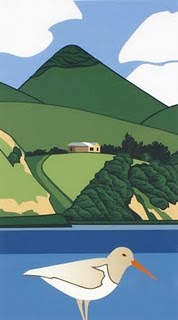
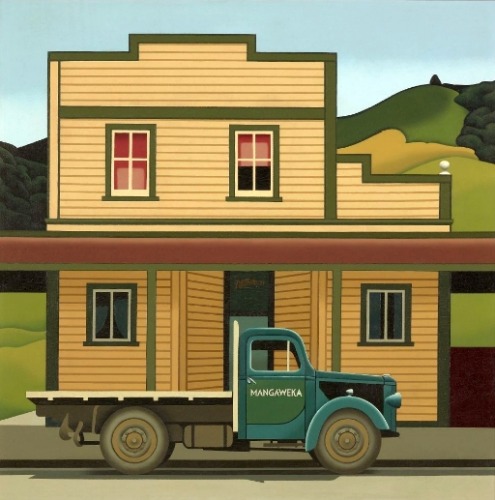
The publisher of three very high quality reproduction prints of artworks from New Zealand painter/printmaker Robin White has ceased production of prints in this format.

The three images affected are Mangaweka, White Oyster Catcher & Harbour Cone and Morris Commercial, Hokianga.

Because of the size and complexity of printing these images to such a high standard they were essentially being printed one at a time for New Zealand Fine Prints, so we have been left with just one print of each artwork on hand now the publisher has deleted this format.

White Oystercatcher and Harbour Cone

Mangaweka

Morris Commercial, Hokianga

This series was such a good idea, despite the high price tag for an open edition reproduction print they really showcased best practice for a digitally produced modern New Zealand fine art print. The care taken to recapture the original artworks at the highest possible resolution through to a diligent choice of the most appropriate paper to print them on to give the buyer decades of enjoyment. 

We understand that the plan is to re-issue the same images in a smaller size, formatted to fit a standard A2 paper size rather than matching the scale of the original artworks.  The benefit of this is the price will be more accessible and framing more straightforward if an off the shelf picture frame is used. However there was something gloriously luxurious about prints of works by such a significant NZ painter being done close to the original size and without any budgetary constraints on achieving the highest quality possible.  But the last prints for sale were just listed in our Endangered Prints collection this morning...

Gallery Prints Closure

Last week saw the unexpected demise of Gallery Prints' in gallery kiosks and their online store.  They closed for the Xmas/New Year holiday at the end of 2017 but the update "Sorry, orders are now closed for the Christmas period" remained in place well into the new year.

Co-owner Reuben Price recently told me that the business will not  in fact be re-opening at all and the ordering functionality had been removed from their website.  The official closure date was 31 March 2018.

Gallery Prints promised to stock "Fine Art Prints from New Zealand's finest Museums and Art Galleries" and they had partnerships in place with Te Papa, Auckland Art Gallery, Auckland War Memorial Museum  and the National Library of New Zealand where prints could be ordered in store via a kiosk or online via a shopping link from the gallery/museum website.

They had a good selection of prints from some great NZ artists such as Robin White and Rita Angus, together with Ralph Hotere, Colin McCahon and Gordon Walters images that were available due to the gallery having purchased the copyright to reproduce images along with the original paintings. Gallery Prints also had a rather eclectic range of botanical and historical material from their partners which might not have been hot sellers but it was good to see a distribution channel for less mainstream images.

It was an impressive effort to co-ordinate a business model like this and here at NZ Fine Prints we were excited to see an example of our nationally or locally owned galleries working with the private sector to promote the artistic heritage of Aoteaora to people interested in buying prints. 

Shame to see it didn't work out, hopefully some lessons can be learned as it seems to make sense to marry the possibilities of short run digital printing with the wealth of our shared cultural resources held in NZ's museums and galleries in some form of public/private partnership.


Artist Submissions

Please note this article is regarding artists submitting reproduction prints of their paintings to NZ Fine Prints, not multiple originals (editions) which are not copies of another artwork. We generally accept submissions of original prints by New Zealand artists as a matter of course. Stocking every NZ print available had been our raison d'ĂȘtre since 1966. 

One of the best and worst parts of my job is dealing with artist submissions.  The thrill of new work that is exactly the kind of prints that our customers are looking for, or prints that we believe should be available to buy even if they may not have the greatest level of sales tempered by the need to gently turn down artists whose work may not work for us.  This is really hard to do but unless we started charging to list prints for sale we have to be sure that a print is economically viable for us to catalogue and promote a new title for sale.

I have written before about how "you should make prints of your paintings" from a studio visitor turning down the opportunity to buy one of your paintings does not validate the notion that there is a market for your work, your visitor may just be being polite!

Type of print (printing method) is an important consideration

Before I touch on the content or theme of your artworks there is the issue of what sort of prints you are planning to publish.

The advent of digital (or giclee) printing means that a small print run is commercially viable, however the high unit cost means the retail price has to be relatively high for what is still a reproduction of another artwork rather than an original print.  This means artists envision selling their prints as "limited edition", signing and numbering each print partly to justify the high purchase price.  However this limits the appeal of the print unless it is very high quality, in a small edition size and in general a big print. We've discussed the different kinds of limited editions and our views on this in an earlier post here

Frederick St Cafe by Wellington
artist Sarah Molloy
Giclee does not have to mean a price over $NZ100.  Many commercial art print publishers print nearly all of their open edition reproductions this way, reserving offset printing only for the top selling images from the most popular artists.  These are the prints we sell for $NZ49.95 - $NZ79.95, up to 600 x 800mm image sizes, they use lightfast inks and acid free paper.   They can do this because they are paying the artists (or galleries, artist estates, museums etc) a royalty on each print rather than the artist taking the full wholesale price.  A royalty payment is a bit less than an artist will receive if they are taking the risk on themselves by self-publishing (printing and distributing their own prints to retailers like New Zealand Fine Prints directly).  However with the cost of digital printers continuing to fall we have recently listed for sale the prints of artist Sarah Molloy, her Wellington scenes are printed digitally and she receives the full wholesale price for her work rather than a royalty but her prints can still retail at a very saleable $59.95 price point.

Subjects & Themes

Tiki Tour Takeaways by Greg Straight
Subject wise we are looking for recognisably New Zealand content.  Prints of places people care about, observations of kiwi life that resonate with us, that reinforce the multifaceted but interlocking identities of modern NZ society.  Kiwiana is morphing into something beyond just a celebration of the icons of Pakeha consumerism to a broader categorisation of unpretentious, accessible decoration with a kiwi flavour.  For instance this new print from Greg Straight, it's a slice of contemporary kiwi life more than a nostalgic view of a less culturally inclusive past.

Obviously well-known artists are good bets as well, we still believe in our role in making good quality prints available at reasonable prices of New Zealander's favourite paintings, prints for people who like the art or artist but are not considering purchasing the original artwork for it may be locked away in a gallery or requiring an investment level of money to acquire it.

Ends of lines - endangered prints about to sell out

"Boat at the Wharf" by Stanley Palmer
(4 prints left today)
I'm writing about our "endangered prints" collection this month because we have had an unusually high number of prints going into this ends of line category in the past few weeks (a few dozen as opposed to a handful every month or so).  This is probably due to the life cycle of the large number of prints published about 10 years back, when there was a structural shift in the market from artists printing reproductions to be on-sold by distributors to a few commercial publishers printing many titles from a single artist on a royalty basis.  There was a natural limit to this market (the size of NZ means there may only be a few hundred people who want a particular scene on the wall, and once they have it they aren't going to buy it again) so the slightly less popular titles from these ranges are not being re-printed and are now selling out.

Probably the print we will be saddest to see go is the beautiful large reproduction of Ralph Hotere's painting "Dawn/Water Painting".  This was originally published by the Christchurch Art Gallery to co-inside with a survey exhibition of Hotere's paintings while he was still alive (as an aside at times like this often a print is not made for strictly commercial reasons, the artist royalty of several thousand dollars will be paid up-front as a sweetener to get the artist's support to show works from their collection).  We have sold this print for many years and it is exactly what we believe in, a good quality reasonably priced art print by a top shelf NZ artist.  It probably will never be re-printed, so our advice to Hotere fans is please buy it today!

Why is this a thing?  It really has a lot to do with the size of the market for prints
Margaret Stoddart "Violets" (Last 2)
of NZ scenes or prints by NZ artists. Often an initial printing of a few hundred prints will be enough to satisfy demand.  The print may be open edition but the economic incentive to re-print is similar to the book industry, there will only be a second run if demand is there.  So, like books, prints simply go "out of print", and are only available on the second hand market.  This does not mean that their value will increase markedly if they are a reproduction of an original artwork but it does somewhat preserve their value around the purchase price as in good condition a print still has exactly the same appeal to a buyer even if it is not brand new (unlike say clothing).

This reality has changed a bit over the past decade as digital short run printing has become more prevalent, digital printing is ideally suited to a small market albeit at the disadvantage that unit costs do not decline dramatically as they do for offset lithography meaning prices are higher (we have seen the average cost of a large art print rise from around $NZ 50 to between $NZ 70-80 over the same period with the amount paid to the artist staying relatively static as the per unit printing cost is the main component in the cost increase (along with a small increase in GST).

So we have three main drivers for prints ending up in our "endangered prints" collection.

1. Print runs selling out.  A publisher, artist or gallery prints a few hundred prints and when they are sold out either customer demand is not there to re-print, or it was a one-off event such as a touring show/retrospective exhibition.

2. Prints were limited edition.  This is a different category altogether, particularly for original prints (where the prints are multiple artworks, they are not copies of another art form such as a painting) but also for reproductions printed in a smaller number, usually signed and numbered by the artist. These have a scarcity value as well as a decorative value and are not intended to be available over a longer period than a few years at most.  Established printmakers like Tony Ogle or Dick Frizzell tend to keep a balance between editions selling out and new work, with broadly the same number coming out each year as sell out - which shows that the supply and demand for their work is in balance.  It always rings alarm bells for us at the investment end of the art print market when initially successful artists with sold out editions begin increasing editions sizes, then the number of new editions each year, this is a slippery slope to beyond the pale re-printing under the guise of "roman numeral" editions etc!

3. Prints produced by commercial publishers using digital printing which theoretically could stay in print forever but are deleted by the publisher.  This is for two reasons. Firstly sales may not justify the space in sales reps catalogues or in administrative overhead (eg calculating artist royalties), one well known NZ publisher and distributor has a rule that if less than four prints a year are being sold they will delete the product line.  Secondly the artist's contract may not be renewed.  Contracts to make prints range from 1 to 3 years, unlike with offset printing where artist's work would be available potentially for years after the contract had lapsed due to a clause that allowed the publisher time to sell all printed stock with digital printing the lower stock inventories on hand means a publisher may only keep a month or two's supply on hand.

Shane Cotton Print - last one!
As soon as we know a print is running out (no firm and fast rule but less than 20 in stock is usually a trigger) we'll start keeping an eye on stock on hand.  When we are down to a number that is about what we would sell in a couple of months we pop the prints into our endangered gallery.  We also update our Facebook and Twitter accounts, and once a year we do a mail out to every one on our mailing list with every NZ print that is running low, so our special bunch of subscribers never miss out on a print they like but hadn't quite got around to ordering.

One final thought, selling prints online makes it so much easier to keep our catalogue up to date which is a blessing! Unlike our printed mail order catalogue which gradually becomes inaccurate regarding availability (and sometimes price) over the course of its useful life we can remove prints as easily as checking a box at the back of prints.co.nz.


We worried NZ might run out of prints to publish (back in 1977!!)

To mark the 50th anniversary of the founding of NZ Fine Prints we have been delving into our company archive throughout 2016. We unearthed this gem of an article where one of the founders of our gallery (then trading as Avon Fine Prints) was found to be musing on the imminent demise of the business - because we would soon run out of suitable New Zealand prints to publish! Forty years later we are still managing to find new prints for our customers to buy, and the trend to a greater choice seems to be accelerating with more prints being published each succeeding year than ever before!  Don was great at generating publicity and the notion that success was spelling the end of a business should perhaps be seen in this light...

A twinge of regret now, but… Success spells the end of a business

Christchurch Star, November 19 1977, p16

A business which folds after a decade might not represent success to some. But when Don Ellis set up Avon Fine Prints Ltd in Christchurch he knew it was only a matter of time until the business destroyed itself.

So the demise comes as no surprise, but it still brings a twinge of regret.

In its wake lie at least 200 different limited editions of prints of some of the finest historical paintings in New Zealand, Australia and the Pacific. More than 20 of these editions have sold out, some with spectacular increase in value. Another 60 or 70  editions have only between 10 and 200 prints to sell. (An edition usually comprises between 750 and 1000 prints.)

Once they’re gone, so virtually is Avon Fine Prints.

Print publisher Don Ellis in 1977
“Avon prints are not being completely phased out. New issues will possibly be made at the rate of one or two a year, and for a short time the paper prints will be made available to collectors,” says Mr Ellis. “It is also likely that another limited edition book or two will appear over the Avon imprint - but most of the Avon group’s activities these days are centred in the Capper Press, with its reprint books and New Zealand art prints; in Avon Picture Mouldings; in the educational division with its imported educational prints; and in Campbell Grant, best known for The Silver Shop.”

Most of the paintings printed by Avon Prints have been out of copyright - the work of very early New Zealand and Pacific artists. If copyright is still functioning, it is usually negotiable, or royalty arrangements can be reached.

At present Mr Ellis is trying to negotiate with a group of New Zealand artists whose work embraces the 1920s and 1930s.  Largely, Mr Ellis is guided by his own preference for paintings, although there is no foolproof way of knowing which works will win public approval as prints.

Some are much more popular than others - for no apparent reason, he says. “All the publisher can do is to feel for his market, have a good idea what he thinks should be done, ask other artists, critics, gallery directors for their opinions, distill all the information and come to a decision.”

Now that the early print business has come to an end, Mr Ellis looks forward to spending more time  working with Capper Press, a business which specialises in the reprinting of old books - particularly those which are extremely specialised. Among reprints to date are Freda du Faur’s book Conquest of Mt Cook, W.S. Green’s The High Alps of New Zealand, Sir Henry Brett’s White Wings, T.H. Pott’s Out in the Open, and numerous others. All these have a limited demand, but are fascinating in their own right, Says Mr Ellis. Among those he has personally found most entertaining and interesting are a couple on herbalists and doctors, and one called Colonists’ Guide: an Encyclopaedia of Useful Knowledge, a book which includes advice on how to cook, how to grow vegetables, and generally, how to stay alive.

Many of the books which are reprinted are chanced upon or brought to light by members of the public; others are selected by the firm. Without a reprint many of them would either disintegrate through old age, or else perhaps be lost in archives.

Begun as a hobby, Avon Fine Prints is the only company of its kind in the world devoted wholly to the publication of historical maps, prints and charts in limited editions. Until this month the prints were available unframed, but now sales of framed prints only will be made.

Why the change? Says Mr Ellis: “The selection and publication of limited edition prints is an intensely personal choice; there are very few historical paintings left to do, and the prints done cannot, of course, be reprinted, so that this side of the business is coming to a natural close.” The balance of the limited edition print stocks are to be transferred to the wholesale and retail framing division of the Avon group of companies, the Picture Shop, in Hereford Street.

When Mr Ellis began the business, people generally had no idea what a print was, he says. Nor did they possess much knowledge or appreciation of New Zealand’s early works of art “People certainly wouldn’t entertain New Zealand prints at that time so we had to have a sales aid, and that in our case was the limited edition print. “We came in on a rise of historical interest in New Zealand - and it has been this which has sustained the interest in the prints. “People suddenly became interested in their town or environment and bought a print of their area. The set of four views Auckland 1852 by P.J. Hogan is one of the best known groups. “The prints helped people to become interested in their own indigenous New Zealand art, and we would like to think that what we’ve done has helped to further stimulate their interest.”

People buying the early limited editions did so in the knowledge that once the edition was sold out, there were no more available. It was a sought-after commodity. “The problem which occurs, however, is that at some time you must run out of suitable paintings from which to take prints.” And with this prospect looming, Mr Ellis started Capper Press about five years ago.

Mr Ellis’s interest in art stems from his childhood. As a young man he built up quite a collection of early New Zealand paintings and eventually decided to start his own business in prints. The Auckland series was one of the first printed and “it went like a rocket”, says Mr Ellis.


Consequently, the business was soon on a firm footing, and today can claim credit for the publication of at least 200 different prints.

Local art publishers have world-wide circulation

2016 has been the 50th anniversary of the founding of our company. This has been a great reason to revisit our history, much of which we have in scrapbooks (actually bound book proofs with blank pages of their earliest publications) dating back to the 1960s.  This article is from 1973 and is particularly interesting as it features the founders of New Zealand Fine Prints Don & Enid Ellis, discussing how they started in the art publishing business with Christchurch reporter David Young.  A note on the name change - in the 1990s the publishing and mail order businesses of Avon Fine Prints and Capper Press were merged into a single company around the time we shifted focus to publishing and online retail when our catalogues went online at prints.co.nz).

Local art publishers have world-wide circulation
"Local Art Publishers" article from 1973
The Queen, the Pope, President Nixon, Emperor Hirohito and Mr Trudeau are among the recipients of the work of a Christchurch company, Avon Fine Prints Ltd.

One of Avon’s more monumental achievements, Cook’s Artists, a collection of the drawings and paintings done by men on Cook’s voyages, became the official New Zealand Government book for 1969.

That year was the tricentenary of Cook’s discovery of New Zealand and the book went to official recipients and private collectors all round the world.

“You name the country - we sent it there”, says Mr D.G. Ellis, who with his wife,
Enid & Don Ellis of Avon Fine Prints
runs Avon Fine Prints.

Both aged about 30, the couple have for the last seven years been publishing reproductions of early New Zealand paintings and prints as well as facsimiles of fine, historical books.

Publishing, not printing, is their line, their speciality being limited, hand-numbered prints of scenes which, while not common, are not unfamiliar sights on carefully decorated walls.

“We are a pirate outfit really,” said Mr Ellis when I telephoned to ask about his operation.

But in a personal interview, this same candour revealed that his and his wife’s interest in New Zealand nineteenth century art is considerable. The couple have an extensive personal collection and it was Mr Ellis’s father’s knowledge of the subject which really led to the establishment of the present business.

World hunt
Returning from Australia in the early 1960s with a bundle of New Zealand paintings by such artists as Hoyte, Gully and Lindauer - all purchased for about £30 and resold here for considerably more - Mr Ellis jun. went hunting for similar material round the world.

His best deal, he says, was a Lindauer which he bought for £20 and sold for £900 - the then top price for a New Zealand painting.

But while the market knew no bounds, the supply of material was distinctly limited.

“So”, he explained, “we had to print our own stuff.”

Mrs Ellis said that in the early 1960s they did a great deal of original research with the help of the librarian at the Alexander Turnbull Library (Mr Tony Murray-Oliver), who suggested that they start publishing limited edition prints.

To start with they did three tiny Canterbury prints by Holmes, hand-coloured, each with a run of 300.

Since then the company has published about 160 editions of prints by artists such as Blomfield, Chevalier, Gully, Hodgkins, Hoyte, Lindauer, Nairn, Sharpe and Wilson, as well as a series of early New Zealand town scenes.

Surprisingly, there is little original work of Canterbury, Mr Ellis pointed out. Canterbury was settled later than many other areas and Dr Barker was on the scene with his camera almost before the artists could set up easel.

Again, the New Zealand material that is suitable for reproduction is limited and Avon Fine Prints is now moving into other Pacific countries to continue its work.

It is the only company of its type in this part of the world, so includes Australian and Hawaiian art among the work it reproduces.

“We can do it in New Zealand because the printing works are geared to smaller runs than elsewhere”, said Mrs Ellis.

“We have the advantage of being able to do a run as small as 300 - which other countries just won’t touch - and we can still obtain quality from our printers.”

Why do people buy prints?

Essentially, say the Ellises, they like the picture for aesthetic, historical and decorative reasons. They also buy prints as an investment.

The object of a limited edition is that it will at least hold its value, monetarily, as well as providing an inbuilt reassurance to buyers that not everyone owns a copy.

The prints do appear to be a reasonable investment - a $6 Canterbury print now sells for $24 and others from limited editions show similar upward movement.

An offshoot of the Avon company is Capper Press, which produces unlimited editions - usually about 2000 - of New Zealand paintings, which sell more cheaply.

Capper Press also publishes facsimile copies of such early New Zealand books as Knocking about in New Zealand by Charles Money.

Spectacular
But the most spectacular undertakings have been Avon’s large, historical book productions.

Apart from the Cook publication, which contained much original research and previously unpublished material, Avon reproduced Pictorial Illustrations of New Zealand, by S.C. Brees, as a facsimile which sold for $60 and which now changes hands for $125.

Now Avon has just completed the printing of a facsimile edition of New Zealand: Graphic and Descriptive by C.D. Barraud (1877).

The giant book, with its 22in by 17in pages, printed on special paper with 76 illustrations including 24 colour plates and a Moroccan finish is a colossal undertaking. The 1000 copies being printed require 11 tons of paper, and special, unmarked skins for the leather cover.

Subscribers from around the world have paid their $35 deposit on the $150 subscription price and, following in the tradition of the 97 year-old original, will have their names bound into the volume - one of the few departures from the true facsimile.

Interestingly, some of the names in the back are the same as the ones in the front - the descendants of the original subscribers in some cases have followed in their grandparents’ footsteps.

Only a few copies remain of the original volume and many of these are now scattered.

“We’re not interested in publishing new books - writers drive me up the wall. We like our authors dead 100 years,” Mr Ellis said.

Not justified
As far as paintings are concerned: “We’d like to go more modern - a lot more modern - but there are not the sales in this country to justify this. 

“Today people in this country are getting sophisticated - they know what they want.

“We’re not arty-minded or anything like that, but we’re interested in good New Zealand paintings and we are leading people to the situation where they can make a choice,”

Mrs Ellis put in: “We are sales and commercially orientated, but our work stems from an interest and a knowledge in our material. You’ve got to put a premium on these things.”

With one exception - when the work was sent to Hong Kong - all the printing is done in New Zealand.

Avon pays reproduction fees to the individual and the institution owning the material. It is often institutions which constitute a large proportion of the buyers of reproductions.

Its reputation now firmly entrenched in so many parts of the world, Avon Fine Prints could continue to keep Christchurch on the map for some years to come.


But however they develop, the Ellises are determined that their work will never loom so large that their personal touch in business is lost.
Stanford Arts closes - end of an era for NZ art print distributor

For the last twenty years the name Stanford Harts/Arts has been part of the art print distribution scene here in NZ.

Originally this wholesale art print distribution business - publishing the "N.Z. Art Prints" New Zealand prints catalogue of kiwi artists - operated from Onehunga in Auckland, part of a larger enterprise "Stanford Arts" that supplied framing supplies, picture mouldings and framing equipment to the picture framing trade throughout NZ.  By the turn of the century Stanford Arts had two branches when another warehouse was opened in Christchurch.  The print distribution moved down to Christchurch and was run by Leanne Haglund, at the time of this shift we welcomed having another distributor so close by to us, just a couple of blocks away from we were located pre-earthquakes in Hereford St.

Popular "Auckland Essence" Print distributed by Stanford Arts
When international framing manufacturer and distributor Larsen Juhl purchased Stanford Harts' NZ operations the wholesale art print distribution business did not fit with the plans of the new corporate owners.  The print department was spun out as a separate business in 2007 and sold to Auckland businesswoman Janet Dalton who renamed the business Stanford Arts (cleverly dropping the H).

Janet had 22 years in the framing industry including owning her own picture framing shop for the 12 years prior to purchasing the print department from Larsen Juhl.  She continued to import on indent from a wide variety of art print publishers such as Bruce McGaw and Rosensteils, as well as wholesaling a growing stable of NZ artists such as Timo Design (Timo Rannali), Rob McGregor and Ingrid Banwell, an Auckland artists whose top selling print features in this post.  Janet was very adept at collating large numbers of different prints from many different suppliers into her weekly deliveries to NZ Fine Prints and it was with some sadness that we heard she planned to close her business in order to retire at the end of 2015.

We have managed, with Janet's kind assistance, to contact nearly all the artists whose prints NZ Fine Prints stock via Stanford Arts and look forward to continuing to make these titles available for purchase both through our mail order catalogues and online.  Unfortunately a small number of art print titles will have to be deleted in due course as stock is no longer available, we'll be posting these prints in our endangered gallery.

Picture framers looking for prints previously wholesaled by Stanford Arts are welcome to get in touch as we may be able to supply prints to them from our stock at trade prices now we are dealing directly with the artists concerned.

Here at NZ Fine Prints we'd like to take this opportunity to wish Janet a long and happy retirement, with more time to travel both here and abroad!

Art print publisher devastated by arson attack overnight

We were absolutely shocked to learn that local art print publisher Image Vault was the victim of an arson attack in the early hours of this morning.  The current owners had only purchased the business back in July of this year.  Christchurch businesses have been through a lot over the past five years, and this event is yet another of those unpredictable "black swans",  but also one that couldn't come at a worse time of year for a business that supplies the Xmas gift market and are at the height of their print production schedule.  We are heartened by the fact Carl and Nicola are reported as saying they were fully insured and able to start printing again at temporary premises and our staff will be offering every assistance to them in the coming days.

The first thing my mother said when she heard of this was to text me that this was the same time of year as our "factory fire".  This reminded me of one of my earliest memories - which is of the fire that gutted our family's picture moulding factory back in the late 1970s. Not arson, this was caused by thinners spontaneously igniting in the dangerous goods store and the intense heat was such that it melted the steel girders of our building in Carlisle St. I remember being lifted up to look into the cab of the fire engine and the smell of the fire.  This was the second time Avon Fine Prints (as New Zealand Fine Prints was known as back then) had been hit by fire, their office above the National Party headquarters in Christchurch had also caught fire when my parents were on an overseas trip in the late 1960s, they returned home to find that their staff had relocated back to the sitting room of their house!

I hope that our business's experience of recovering from similarly devastating fires a long time ago means that the path back to normality for Image Vault will not as long or as hard as it must seem from the vantage point of today for Carl, Nicola, Jen, Amanda and Tony at Image Vault today.

Print on demand and hopefully cloud storage of their catalogue of files that they need to print canvas art prints will mean technically they can be back in business quite quickly, but the framing side of Image Vault's business may take longer to recover due to the loss of equipment and supplies - we may not be able to offer the standard box framing on their titles for at least a few weeks.  We are also concerned that because their back stock of off-set prints will have been lost many of their older titles from artists like Grahame Sydney, Diana Adams, Barry Ross Smith, Jason Kelly etc may not be able to be re-printed on demand as the contracts with the artists last only as long as physical stock was on hand.  NZ Fine Prints hold a few months worth of stock of most of these titles but this may mean some popular prints may be deleted well before the editions would have sold out naturally.

The earthquakes were incredibly disruptive but print buyers were overwhelmingly supportive and understanding of delays as we all juggled frantically behind the scenes to get their orders shipped. In the weeks following the Feb 22nd quake we had just one customer cancel their print order. This is another of those times that we will do our very best to let you know immediately if there will be a delay in shipping your order and in return ask for a bit of leeway if your print is delivered outside our normal delivery guidelines due to this devastating fire at one of our favourite suppliers.  

Thorndon Fine Prints - Publisher of Early NZ Maps & Evelyn Page Prints

We were sad to hear of the recent death of Sebastian Page.  The founder of Wellington's Thorndon Fine Prints had let us know that he was selling the business due to ill-health a few months ago.  In my role as the catalogue manager for NZ Fine Prints I have been purchasing from Thorndon from the time I first graduated from Otago and joined our family's business.  Seb was a great person to deal with, always packaging the prints with care and getting them to us on time.  In later years I would always get a phone call letting me know when he and Marcia (of Page Blackie Gallery) were heading off on their winter holiday so I could make sure we had enough of the ever popular Thorndon "Cook's Map of NZ" on hand until their return.  Oh how envious I was as we headed into another Christchurch winter!
Map of NZ and the Pacific by Zatta based on Cook's charts

Our gallery has now purchased the remaining stock of fine art prints, maps and charts published by Thorndon Fine Prints.  Alongside all the titles we have promoted previously (like this map of the Pacific by Zatta) there are some additional prints that we now have for sale for the first time - in a couple of cases these are duplicates of images published previously by Avon Fine Prints such as the Cassini map based on Captain Cook's charts that we hadn't seen the need to double up on previously - but there are also some really well priced smaller prints from Buller's "Birds of NZ" and a couple of fine NZ botanical prints such as this print of Pohutukawa (historically interesting as it has an earlier spelling of Pohutukawa and is titled Metrosideros Tomentosa rather than the modern nomenclature of Metrosideros Excelsa) by 19th century NZ botancial artist Sarah Featon.

The story of Thorndon Fine Prints was detailed in some of the brochures that we received with the prints and worth recounting to make sure Seb Page's contribution to art print publishing in NZ is long remembered.

"In 1990, inspired by an awakening of interest in historical New Zealand, and particularly in the era of exploration and discovery, Thorndon Fine Prints issued two fine replicas of the most collectable of antique New Zealand maps, Cook's Chart of New Zealand, originally published in 1772, and the map of colonial settlement published in 1845.  Subsequently the range has been extended to include the most popular maps and prints relating to New Zealand and Pacific history, including some of the most decorative images of discovery, settlement and natural history, by the acclaimed artists of the time.  All reproductions are printed on the finest quality papers and presented with well-researched documentation."

Evelyn Page Prints from Thorndon Fine Prints

Seb Page was the son of artist Evelyn Page.  One of NZ's most celebrated artists Evelyn Page's
Evelyn Page on the
cover of "Art New Zealand"
vibrant paintings of nudes and still-life are among the most memorable images in New Zealand art of the twentieth century.  Thorndon Fine Prints began their publishing relationship with the Evelyn Page Estate in 2002 with their limited edition print release "Why Go To the Riveria? - Oriental Bay, Wellington".  The unprecedented success of this inaugural publication led to the inclusion of two more images by Evelyn Page in the Thorndon Fine Prints portfolio the following year.   Exclusive to Thorndon Fine Prints they were reproduced on the finest quality paper using UV resistant inks.

We are delighted to stock the three prints exclusively available from Thorndon alongside the Christchurch Art Gallery published print of Summer Morn (their edition of the every popular "Pohutukawa Rina" is unfortunately currently out of print while the gallery is closed).

Image Vault News

The news that we reported on our Facebook page and Twitter feed three weeks ago concerning the pending sale of NZ art print publisher Image Vault has today been officially confirmed via email to all their stockists today.

"Dear All,

As most of you will already know, from July 1st Image Vault will be under new ownership. 
Due to an unfortunate glitch in our system, we were unaware that this formal notification had not been made, so we apologise profusely if this news had not already reached you!

The new owners are Nicola and Carl Church - and they are so excited to be embarking upon this new adventure! They bring fresh energy and ideas, and are hoping to meet with you at the Auckland Gift Fair in August. 

Many of you have been our loyal customers for many years, even dating back to our start in the top floor of Windsor Gallery! We want to acknowledge and express our gratitude for your support - it is your encouragement and feedback that allowed Image Vault to grow into the company it is today. Jane and Nathan will continue their association with IV by advising on product development and design, and Hamish will be on hand to ensure as smooth a transition as possible.

Again, a huge thank you to you all.

Nathan Secker, Jane Secker, Hamish Bayly"

NZ Fine Prints was the customer they referred to in the email, this writer used to walk around to their High St gallery
Early Image Vault print - Coastal Breeze by Diana Adams
from our building in Hereford St to collect the first bundles of prints.  Image Vault had a great run with prints by artists such as Grahame Sydney and Diana Adams, riding the kiwiana art boom with prints like the Sweet As series by Jason Kelly whilst making the transition from offset printing to print on demand.

We wish the new owners the best of luck and look forward to promoting all the new artists and artworks they will publish in the future.

Reproducing Gordon Walters artworks as prints (continued...)

Publishing prints of Gordon Walters artworks - a recap
The print of Gordon Walters' painting
"Kahukura"
(published by the Capper Press)

Back many years ago now our family's publishing company "The Capper Press" published a good quality photo-lithographic (off-set) colour reproduction print of a Gordon Walters koru series painting "Kahukura" - pictured here.  Prints of other Gordon Walters' artworks had also been made by other publishers and posters from exhibitions featuring good sized reproductions of his paintings and original prints were also on sale from time to time.

The print of Kahukura was about to sell out in 2007. In accordance with the publishing agreement we had with the artist - quote "In the event of an edition becoming out of print, the Publisher may reprint at his [sic] discretion" we went to re-print this popular print.  However an unexpected problem arose in what is usually a very straightforward process when we wanted to make sure we could do the best quality print possible.  This meant rather than re-using an old transparency we would use a fresh crisp digital image from Victoria University of Wellington in whose collection the original painting of "Kahukura" hangs. When they asked us to confirm clearance with the copyright holder (no longer Gordon Walters himself as he had died in 1995) we were stopped in our tracks by the Gordon Walters Foundation which now controlled his estate.

The reason the Gordon Walters Foundation gave for refusing permission for Victoria University to give us a new image to re-print was based on a legal opinion they had obtained regarding the original memorandum of understanding between our family's publishing company and Gordon Walters that we had forwarded to them - a narrow legalistic response that ignored the clear intent of the artist freely given while he was alive to allow reproduction prints to made of this painting.

Although this opinion was not persuasive we chose not to take it further for two reasons. Firstly out of respect for the wishes of the trustees of the Estate (they had presumably resorted to legal nitpicking because they didn't want prints being published, their reasons for this were never made clear but obviously this was the effect they wanted).   Secondly over the longer term we knew to try and win a narrow legal argument over the miniature of a yellowing agreement concerning just "Kahukura" meant we'd lose the goodwill of the Foundation's trustees when it came to us (or any other publisher) requesting copyright clearance to publish prints of other artworks by Gordon Walters in the future.

Previous more detailed discussion on this issue goes back to 2008

New Print Available - First Gordon Walters Print for a decade!
Print of "Makaro" - Painting by Gordon Walters
from Te Papa Collection Ref: 1970-0021-1
However the reason for re-visiting this issue is because, somewhat surprisingly given what is described above, we can announce that for the first time in a decade there is a new Gordon Walters print available for sale!

It is relatively expensive for an open edition reproduction print at $109.95 for a 510 x 670mm sized image. This is because they are being printed using the "one print at a time" giclee method rather than off-set and we are paying TWO separate commission amounts (neither amount goes to the Gordon Walters Foundation because the copyright for this painting was sold to the national museum along with the actual painting, it's Te Papa and their partner giclee printing company in Auckland who are getting the publishing royalties from Makaro). The irony is that the Foundation have effectively given a monopoly to the only publisher that ensures they will receive no financial benefit from any sales!

If this print does (as we certainly expect it will) become one of NZ's top selling prints I hope that the trustees of the Gordon Walters Foundation will revisit the issue of refusing to allow prints to be sold of the work of Gordon Walters. Making the artwork of significant New Zealand artists accessible to the thousands of people who appreciate their work but can't afford an original whilst raising ongoing revenue to promote the aims of the artists' Foundation via publishing royalties is recognised as making sense in the case of estates of similar artists Colin McCahon and Rita Angus - it's pretty conventional practice that shouldn't raise any concerns for the Gordon Walters Foundation trustees.

Lets hope this new print will not be the only one for print buyers to choose from until Gordon Walters' artwork leaves copyright in 2045!

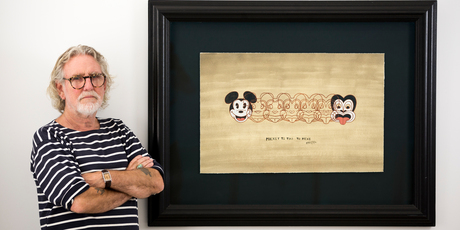
Mickey to Tiki now available in two new sizes

Dick Frizzell with Mickey to Tiki
(Image via NZ Herald Photo: Greg Bowker)
With the closure of the Christchurch Art Gallery shop for at least two years the art gallery has given the exclusive right to reproduce several prints from their collection to Christchurch publisher Image Vault for the next three years.

This includes the right to reproduce NZ's top selling print of the last few years, Dick Frizzell's "Mickey to Tiki Tu Meke" (the story behind how this print originally came to be in the collection of Christchurch Art Gallery is here).  Because of this new arrangement we are now able to offer Mickey to Tiki in two new smaller sizes at lower price points (265 x 400mm at $49.50 and 365 x 550mm at $77.50).  Prints in the original size (735 x 480mm) are still available but we are not sure for how long at this stage.


Saluting a NZ art publishing success as Grahame Sydney quits prints

Nighthouse II by Grahame Sydney
New Zealand's most successful art publishing collaboration of the past two decades is coming to an end.  We have been told by Christchurch publisher Image Vault that immensely popular contemporary NZ landscape painter Grahame Sydney is withdrawing copyright permission to reproduce his paintings digitally (so called giclee printing) and we understand that other editions previously available as off-set only will not be re-printed once these sell out.  This affects several popular titles immediately that are printed digitally - including Nighthouse II, Evening at Ben Ohau and Albatross at Deborah Bay which will no longer be available once our stock on the shelf is sold - and the other titles will progressively be discontinued by NZ Fine Prints as the publisher deletes them.

This marks the beginning of the end of one of the most successful publishing relationships in our industry's history as for several of these past few years Grahame Sydney was the top selling NZ artist for New Zealand's galleries, picture framers and other retailers selling prints.

Grahame initially self-published prints in the late 1970s - reproducing his paintings Rozzie at Pisa,
Evening at Ben Ohau by Grahame Sydney
Dog Trials Room, Auripo Rd and Wilson's Boys Boat [when you see an interior shot of Sydney's house on television or in a magazine the image of Rozzie at Pisa on the wall is actually one of these prints - the original is in the national collection at Te Papa!].  The first editions in the Grahame Sydney series from "Image Vault at Windsor Gallery" date back to before the time the Secker's sold the gallery to concentrate on printing and publishing under the Image Vault brand.  The "Grahame Sydney Series" (that eventually numbered prints of over 50 different paintings) was one of the foundation publishing projects of Jane and Nathan Secker back in the days that they still worked at the family owned Windsor Gallery in High St, Christchurch. This writer remembers collecting bundles of these first prints wrapped in brown paper after climbing the narrow stairs to where the Secker's embryonic publishing company occupied a warren of small rooms above Windsor Gallery in an old building now demolished following the Christchurch earthquakes! 

Tens of thousands of Grahame Sydney prints were sold during the late 1990s and the first decade of the 2000s with Grahame's original paintings climbing in value as well in no small part due to the wider appreciation of his work that large scale reproduction delivered. Grahame's contemporary realistic (but, he insisted, never photographic!) scenes fell comfortably into the tradition of New Zealander's decorating with landscapes devoid of people but with their modern more lightfast inks and large format they showed a clear technical advance from prints printed in NZ in the 1970s and 80s for print purchasers (until Image Vault began printing using wide format inkjet printers in-house all the Sydney prints were printed using off-set lithography by Christchurch's Rainbow Print).  

The Sydney series was a publishing milestone - the first time that a single contemporary NZ artist had had such a large number of paintings reproduced and simultaneously released as art cards, mini prints etc. It also marked a change in the distribution model to a complete framed product being sold into non traditional retail outlets such as gift and furniture stores rather than unframed prints via small owner operated frame shops ordering for customers via catalogue.

Albatross at Deborah Bay by Grahame Sydney
We will certainly miss stocking prints by Grahame Sydney but we'd like to take this opportunity to offer our congratulations to the artist, publisher and printer for creating one of the most successful art print publishing partnerships in our industry's history. Well done! 

Illustrating this article are the first three Grahame Sydney prints that we have had to move into our "endangered" gallery today (our collection of prints about to sell out) - we have between five and twenty copies of these titles left in stock today (early June 2013).  As always please order promptly to avoid disappointment as once these prints have sold they will not be available to buy again.

First prints of Pat Hanly paintings for 20 years!

Print of Pat Hanly's 1988 Painting "Doing It"
480 x 480mm image size $NZ69.95
Just published and available to buy today from NZ Fine Prints are the first fine art reproduction prints of paintings by NZ artist Pat Hanly to be available since the late 1980s!  In the words of the publisher "Over a career spanning four decades, Pat Hanly proposed a new manner of looking at New Zealand - the land and its people. His art heralded new ways of thinking about this country - as a nation that belonged to the young and the adventurous, to the dreamers and to those who could see the vital place the island nation could have within Polynesia and the broader Pacific."

The two paintings that have been chosen for reproduction feature on the covers of the standard and limited edition versions of "Pat Hanly", a book recently published by Ron Sang Publications. The chosen paintings are Hanly's 1988 work "Doing It" (illustrated at left) and a 1973 still life painting "Telephone Table".

The large-scale reproductions showcase two paintings from an output which "must stand as the most vivid, animated body of paintings by a single artist to have yet hailed from New Zealand."

Lady Diana Isaac & her role in making Mickey to Tiki by Dick Frizzell NZ's most popular print ever

The recent death of Christchurch businesswoman and philanthropist Lady Diana Isaac was acknowledged by New Zealand's prime minister, John Key, who said “Lady Diana’s contribution to Canterbury and New Zealand was truly remarkable. From her early philanthropic work with her late husband Neil, right up until the time of her death, she was an outstanding champion for Canterbury, the arts and conservation”.

Mickey to Tiki by Dick Frizzell (original 1997 lithograph)
What wasn't mentioned in the many tributes was Lady Isaac's pivotal but little known role in the remarkable success of NZ's top selling print of all time, Mickey to Tiki Tu Meke by Dick Frizzell. The original Mickey to Tiki lithograph was printed by Dick in an edition of 50 on the 8th of October 1997.  Lady Isaac purchased number 5 of the edition and in 1998 she presented this print to the Christchurch Art Gallery.  It was Lady Isaac's print that was reproduced as a photolithograph (controversially including the 5/50 in pencil below the image that was to cause so much confusion initially about whether the reproduction was an original print or not).  Mickey to Tiki has been exhibited continuously at the gallery since Lady Isaac's presentation of the print to the gallery, most recently what has become Frizzell's most famous artwork featured in the "I see red" show at Christchurch Art Gallery and toured as part of an exhibition of the same name to other NZ galleries in 2009.

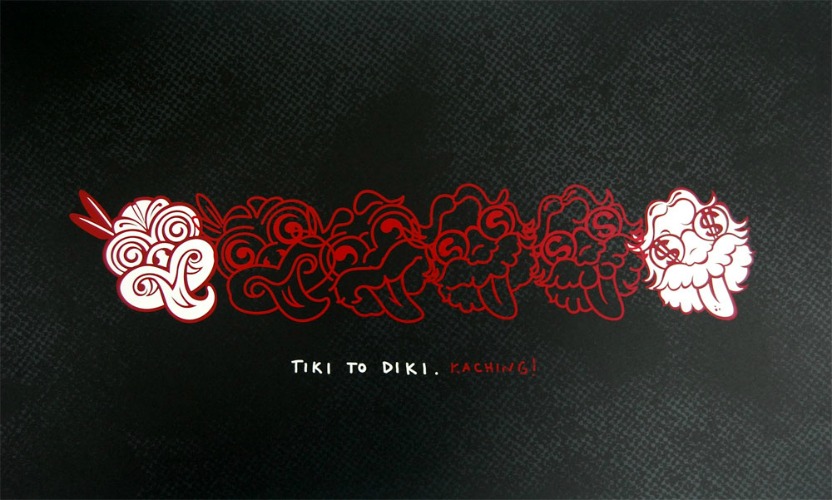
Tiki to Diki by Shane Hansen
The Mickey to Tiki image has become part of NZ's visual culture, it is widely studied at schools across NZ and is regularly referenced in artworks by other New Zealand artists such as in Shane Hansen's Tiki to Diki (shown here) and Lester Hall's Tiki Mouse.  Frizzell himself has re-visited his 1997 lithograph with his screenprint "Mickey to Tiki (Reversed)" which is half way through the edition already as we head into Xmas.

As the prime minister said in his statement “Lady Isaac was also a huge patron of the arts...her decades of philanthropy will be enjoyed for generations to come", and we'd like to say how much we appreciate her role in what has become New Zealand's top-selling print.

Printing & selling canvas prints - advice for NZ artists from Christchurch painter Linelle Stacey

The trend for artists to reproduce their work as canvas prints either instead of or alongside traditional paper prints has (along with the migration from offset to digital printing) been one of the major changes in the reproduction prints part of our industry over the past ten years.

Artists contact us regularly to ask how they go about making and selling prints of their paintings on canvas so NZ Art Print News spoke to one of the most successful sellers of reproductions on canvas in New Zealand to find out how she does it.

Christchurch artist Linelle Stacey who publishes
a top selling range of reproduction canvas prints
of her paintings
We asked Christchurch painter Linelle Stacey what made her decide to publish and sell prints in the first place. She told us that she had "painted a little through my teens and even exhibited my work in my early twenties but then marriage and a family took precedence and I put my art aside until my family was grown.  Five years ago I gave up a full time job to be an artist and soon found it was difficult to provide an income from painting alone. Having prints as well as paintings for my customers to purchase has allowed me to continue to paint full-time and gives my customers a lower priced options for buying my artworks."

Stacey did not choose to publish prints on paper because she painted on stretched canvases and by printing on canvas the artworks would be "as much like the originals as was possible".

To achieve the level of sales that Linelle has she didn't simply reproduce prints of her favourite paintings to see how they would go. Her first step was to research the market, both to see how prints were being made and find out what subjects and scenes were popular. She told us "I went to as many galleries and print retailers as I could find to see what prints were currently available and asked questions about the printing processes that were involved. I used the internet and also rang printers and again asked a lot of questions."

A lot of artists get stuck trying to find the right printer (we wrote about the options available in NZ digital printing market from a more technical point of view last year here) so we asked Linelle how once she had decided which images to print how did she choose the printer to print her canvases for her? She told us that "I spoke with a large number of printers, telling them what I was looking for and eventually found around half a dozen that I felt could possibly provide the kind of prints I was looking for".

Her next step was to compare canvas printers.  "I invested a little money at this point in getting samples from these print companies so I could physically see what their prints looked like. I was then able to compare quality, the materials they used, prices and delivery timeframes." Linelle ranked the results of her sample printing with quality being her number one priority, but always balanced against price. "In the end", says Linelle,  "I think it came down to a desire to work with me to provide the kind of print I wanted at a price that was acceptable. There are a lot of companies who simply say – this is what we do and this is the price. They didn’t particularly care or even listen to what I was trying to achieve."

In the end the printer Linelle chose is based in New Zealand.  She said "I ordered some samples from overseas printers. This was a very expensive time consuming process and the quality was rubbish compared to the NZ companies I’d trialled."

"Routeburn Stones" Linelle Stacey's latest canvas print
1000 x 400mm $NZ 199.95
We asked Linelle how she went about selling the prints once they had arrived, and what are her most popular subjects. She told us "I sell through the internet, through retail outlets (and of course you can buy all of Linelle's canvas prints from NZ Fine Prints' canvas prints collection) and my studio. My most popular subjects are the same with my prints as with my paintings, beaches (especially towards the end of summer), winter mountainous landscapes, monochromatic images and landscapes with dramatic lighting such as the Lindis Pass."

Finally what are Linelle's hot tips for NZ artists considering printing and selling reproduction prints on canvas?

1. Great images of your artwork are key.  Linelle has a very talented photographer who produces the most amazing digital copies of her work. Have a look at our article by Auckland photographer Bret Lucas on "How to photograph a painting" if you would like to learn more on this vital first step.

2. Don’t be put off by information from any one company. There are many different printing services out there and with perseverance you will find the right one for you.

Thank you Linelle for sharing your experience with publishing canvas prints with NZ Art Print News.

Retro or Vintage? How do we classify prints?

Vintage Shipping Poster
One of my jobs as the catalogue manager at New Zealand Fine Prints is sorting the latest prints into categories - because we want our customers to quickly and easily find the prints they want to buy when they visit NZ's largest art print shop. We don't expect our customers to always have in mind the exact artwork they are looking for when they start shopping at NZ Fine Prints. If a buyer has a specific print that they are searching for (or are only looking for prints available by a particular NZ artist) - then it's straightforward to search by keyword or alphabetical listing by artist surname. Although we do have a master gallery of all prints in stock at NZ Fine Prints listed in alphabetical order by title we spend a lot of time thinking about how to thematically link prints so that buyers can easily slip into a rich vein of art that is exactly the sort of thing they are looking to buy without having to trawl through every one of the thousands of prints in stock.

Unlike books which come already classified by the publisher and easily organised using the Dewey decimal system prints can be organised easily by artist/photographer/printmaker and by type (such as lithographs or prints on canvas) and by period but much less easily by topic than you might think at first glance. This has been shown recently when trying to decide how to categorise a series of pictures from New Zealand painters and designers that are clearly not contemporary in a fashion forward interior design sense but are a contemporary artwork that Retro Ski Poster by Paul Nyis referencing or remixing kiwi culture and especially kiwiana icons. I didn't feel comfortable selling these modern designs such as "Ski NZ" by Image Vault's Paul Ny pictured here alongside the real deal (eg prints of actual work by early NZ graphic designers such as Leonard Mitchell and Marcus King) in case buyers thought we passing them off as genuine historical designs. So we have decided to re-organise the images into two galleries, retro and vintage.

What is the difference between the retro and the vintage collections at NZ Fine Prints? We have decided that vintage means old, classic and authentic. Retro has two meanings in art and design. It is often used as a shorthand to describe a design period more recent than vintage, for instance mid twentieth century furniture such as your grandparents formica table is retro. However we have decided that the second usage of the word to describe contemporary design that is looking self-consicously back to an earlier period (as in the "neo-deco" retro style of designers Terry Moyle and Rosie Louise from NZ's Contour Creative Studio) is a more useful way of categorising the modern prints. Our retro collection is therefore the home of modern designers and artists working in a retro style such as Contour Creative Studio, Paul Ny and kiwiana art specialist Jason Kelly. Whose style could probably also be called "old school", now that makes me wonder if compiling an "old school" collection is a helpful idea as well…